
Part of: How to Plan a Multi-City Trip Without Losing Your Mind →
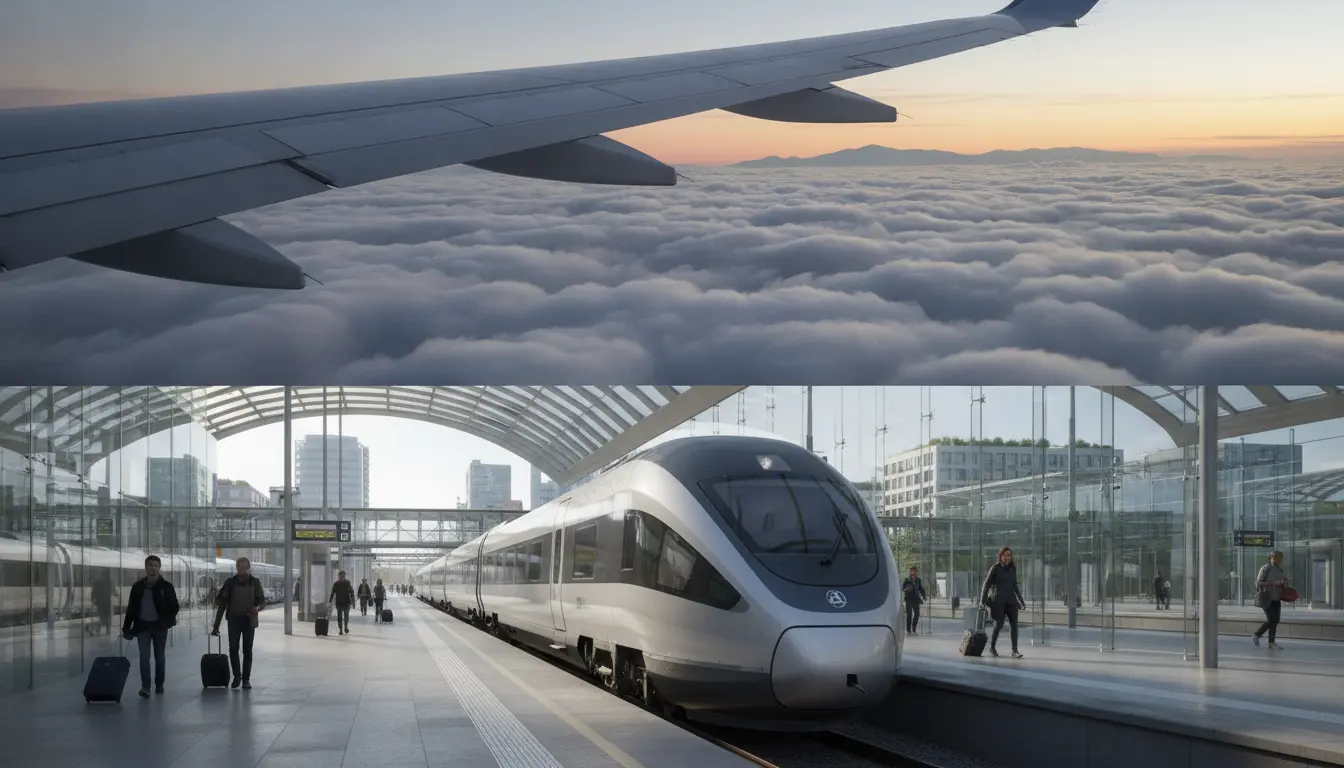
You can master multi-city trip planning by calculating real door-to-door transit friction rather than looking at flight schedules alone. Choosing between a train or a plane determines whether you spend your vacation exploring downtown sights or waiting in security lines. When you compare all hidden transfers, total baggage fees, and daylight hours, the right option becomes immediately clear. Here is how to make the best travel choice for every single leg of your itinerary. For the bigger picture, see our guide to planning a multi-city trip, and if the order of your stops is not fixed yet, start with how to plan multi-city routing without backtracking.
Key Takeaways
- Rail often matches or beats flying on door-to-door time when the train ride is shorter than about four hours.
- Calculate the total cost of a leg by adding airport shuttles, rideshare fares, and luggage add-on fees to the base airline ticket.
- Book open-jaw multi-city flights into your first city and out of your last city to connect intermediate stops by train without backtracking.
- Pick direct sleeper trains to save a hotel night, but avoid overnight routes that demand intermediate transfers before dawn.
Step 1: Calculate Door-to-Door Travel Time
Start your comparison by mapping out the entire travel period from your current hotel lobby to your next destination room. A scheduled flight of one hour rarely equals a one-hour trip. Instead, flying requires taxi rides to distant suburbs, long check-in lines, security screening, boarding delays, and baggage collection. These extra steps turn a short hop into an exhausting half-day ordeal.
Rail transit operates under an entirely different model. In many cities the main train station sits in or near the center. You can take a brief subway ride or walk straight from your hotel to the platform. Also, many trains need a much shorter arrival window than a flight, though the rules vary by route and operator. When the train ride is only a few hours, the train often matches or beats the plane on true downtown-to-downtown time.
Watch out: Do not let airline flight durations fool you during quick route comparisons. Add airport transfers, the airline’s recommended arrival window, and terminal queues to every air schedule before you compare.
Step 2: Add Up the Full Cost of the Entire Leg
Look beyond the base ticket price when comparing transportation budgets. Budget airline tickets seem inexpensive at first glance, but airlines unbundle basic conveniences to maximize profits. You may pay add-on fees for larger carry-on bags, checked luggage, seat selection, and on some airlines even a boarding pass printed at the airport.
In addition, ground transportation to outlying airports can consume significant cash. Express airport trains, highway shuttles, and rideshares can add a large share to the total cost of the leg. Conversely, many rail operators let you bring more luggage than budget airlines without extra baggage fees, though the rules vary by operator. Train stations also connect directly to inexpensive downtown public transit networks.
Pro tip: Tally every expected baggage fee, seat reservation cost, and airport taxi fare into a single spreadsheet column before choosing your ticket.
Step 3: Audit Lost Sightseeing Hours and Daily Fatigue
Evaluate how each transportation mode affects your energy and usable daylight hours. Flying can fragment travel days and break sightseeing momentum. The repeated cycle of boarding ground transport, clearing security checkpoints, sitting at boarding gates, and waiting for baggage leaves little time for relaxed exploration. As a result, you often lose an entire afternoon to transit logistics.
Trains offer continuous blocks of calm, usable time. On many routes you get a roomy seat, more legroom, and often a power outlet. You can catch up on reading, enjoy a meal from the dining car, draft journal entries, or nap peacefully while rolling past countryside scenery. A morning train trip leaves your late afternoon and evening completely intact for touring your new stop.
Pro tip: Schedule your train departures for early morning or dinner hours. This pacing preserves the middle of the day for museums, walking tours, and outdoor dining.
Step 4: Evaluate Sleeper Trains and Late Flights for Overnight Savings
Determine whether an overnight journey can replace an expensive hotel stay. A night train combines your transportation cost and your lodging expense into a single purchase. You fall asleep in one city center and wake up ready to explore your next downtown stop at dawn. This strategy preserves your daylight hours for sightseeing and saves one night’s hotel bill.
However, examine the route stops before booking an overnight sleeper carriage. An overnight train route that requires an intermediate transfer in the middle of the night destroys sleep quality. If you must change cars before dawn, the resulting exhaustion will spoil your next full day of vacation. Alternatively, a late evening flight can work well if you fly out after dinner, but make sure your arrival airport provides dependable midnight transit into town.
Watch out: Prefer direct sleeper trains that allow uninterrupted sleep. Avoid overnight rail connections that force you onto dark, cold platforms at three in the morning.
Step 5: Pick the Plane for Geographic Barriers and Long Distances
Recognize the specific situations where aviation remains the undisputed winner. Flights are often the most efficient choice when your itinerary crosses open sea or a major mountain barrier. Compare them with ferries, tunnels, and direct rail routes, because a slow detour by land or sea can cost a full vacation day.
Air travel also wins when destinations sit thousands of miles apart without high-speed rail corridors. If a train route requires multiple changes and consumes more than eight hours of daylight, flying becomes the practical option. A flight restores your schedule and transports you across vast continental distances in a single bound, giving you extra days to enjoy your destination.
Pro tip: Lean toward flying when the rail option is slow, needs several changes, and covers a long distance between regions.
Step 6: Build Open-Jaw Routes to Avoid Backtracking
Design your broader multi-city framework so that each leg moves in a forward direction. Far too many travelers make the mistake of booking standard round-trip flights in and out of the same airport. This choice can cost you vacation time looping back to your starting point just to catch your flight home.
Instead, book an open-jaw multi-city flight itinerary. Fly from home directly into your first destination city, and book your return flight home out of your final destination city. Then, link all intermediate cities in a clean, linear chain using downtown train routes. This geographic layout eliminates redundant journeys, protects your vacation budget, and maximizes your sightseeing time.
Pro tip: Use airline search engines with the multi-city tool enabled. On many routes an open-jaw ticket costs about the same as a round trip, so compare both before you book.
Step 7: Balance Route Pacing with Transit Recovery
Pace your itinerary carefully to protect your physical stamina (our guide to pacing a multi-city itinerary covers this in depth). A vacation packed with daily hotel checkouts, early departures, and constant transit logistics quickly leads to burnout. Avoid stringing several travel days together, no matter how fast the train or flight seems on paper.
Plan your multi-city stops around multi-night stays. Spend at least two or three nights in each major location to build a comfortable rhythm. When you intersperse scenic, relaxing train journeys between multi-day stays, travel days turn into refreshing breaks rather than stressful chores. Giving yourself adequate downtime ensures that you remain energized and enthusiastic throughout your entire trip.
Watch out: Avoid single-night stays in consecutive cities. Packing and unpacking every single morning drains your energy and wastes hours that belong to sightseeing.
Next Steps for Your Multi-City Adventure
Now that you know how to weigh door-to-door transit against air travel, you can lock in your transportation choices with complete confidence. Start by laying out your target cities on a digital map to spot natural linear paths. Check whether fast high-speed rail lines connect your primary stops downtown. If the train travel time is reasonable, book your train tickets early to secure the best seats.
For longer journeys across water or immense distances, search for direct flights that fit your timeline. Remember to factor in baggage allowances and airport transfer costs before purchasing any low-cost airline seat. By balancing downtown train rides with smart point-to-point flights, you will create a seamless, relaxing vacation from start to finish.
When the legs are booked, keep every train, flight, and hotel in one shared plan for the whole trip.
Your virtual travel guide
Plan your multi-city trip in minutes
Add your cities and a hotel in each. AIrConxt sequences the whole journey, layovers and all, onto one timeline you can share.
Start planning →